Subscriptions
All your subscriptions and bills in one overview
Streaming, the gym, insurance, energy: each one is small, together they are a large part of what you spend every month. Linkly lists them from your bank payments and keeps track of what they cost and when you can leave.
What counts as a recurring cost?
Recurring costs are the ones that keep coming back: rent or mortgage, energy, insurance, internet and phone, and subscriptions such as streaming, the gym or a newspaper. Usually monthly, sometimes quarterly or yearly.
A list of them answers two questions: what is gone every month before I have spent anything, and is there something in there I no longer use or could get cheaper?
How people keep track today
Four ways you see a lot:
- Not at all: the payments keep going out and show up on the statement.
- A list in a spreadsheet or a notes app, which is right until something changes.
- Going through the direct debits in the bank's app, one account at a time.
- An app that spots subscriptions and cancels them for you.
Where it goes wrong
Signing up takes a minute. Cancelling means knowing you have it, what the notice period is and where to go.
- A free trial quietly turns into a paid subscription.
- A price increase is announced in an email you never read.
- Yearly costs slip your mind until they are taken from your account.
- The terms are in a contract you can no longer find.
Source: Rijksoverheid, Mag mijn abonnement stilzwijgend verlengd worden? (in Dutch)
How Linkly keeps track of them
Linkly is still in development. This is what it does today; the screenshots show sample data.
Linkly spots what comes back
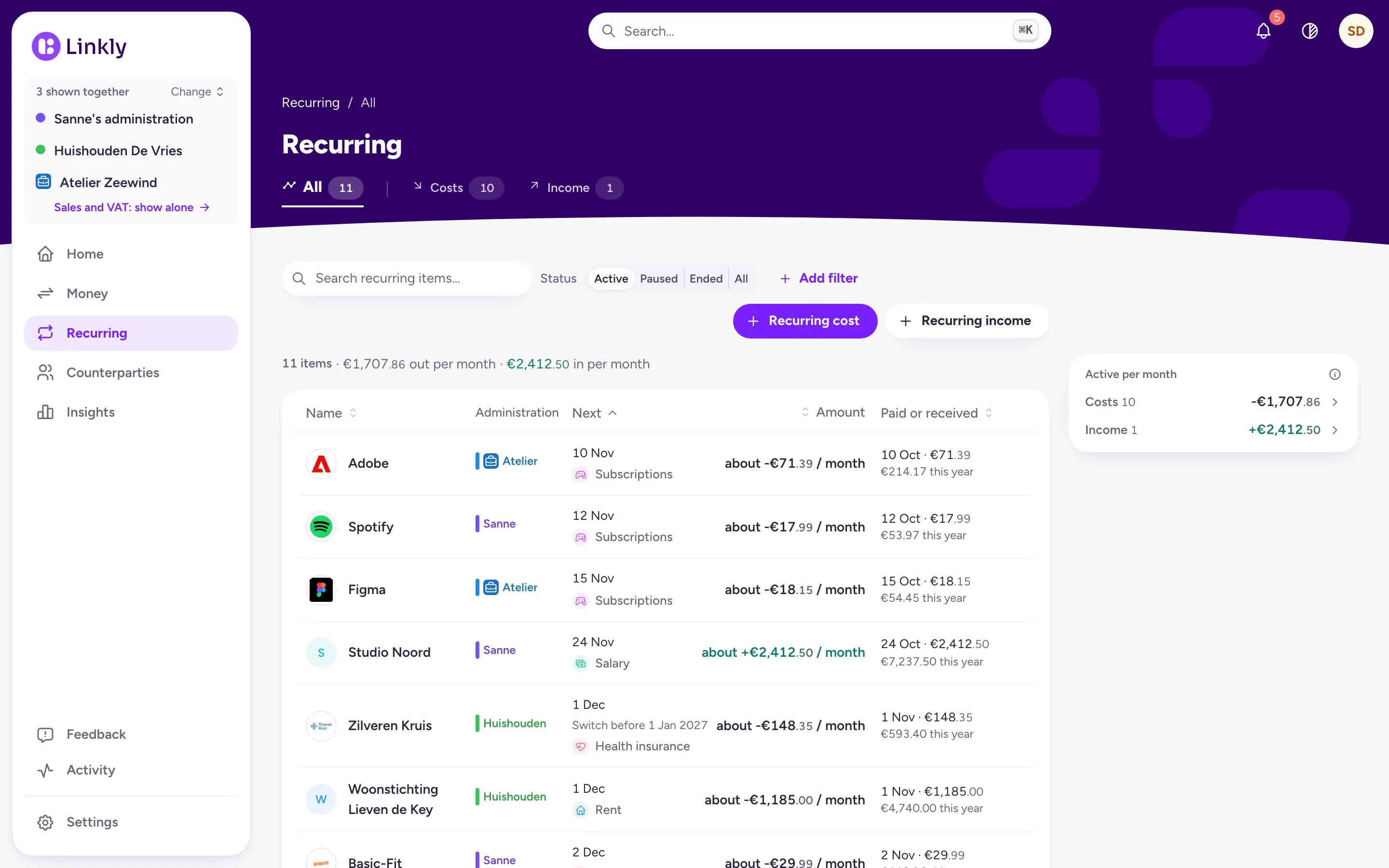
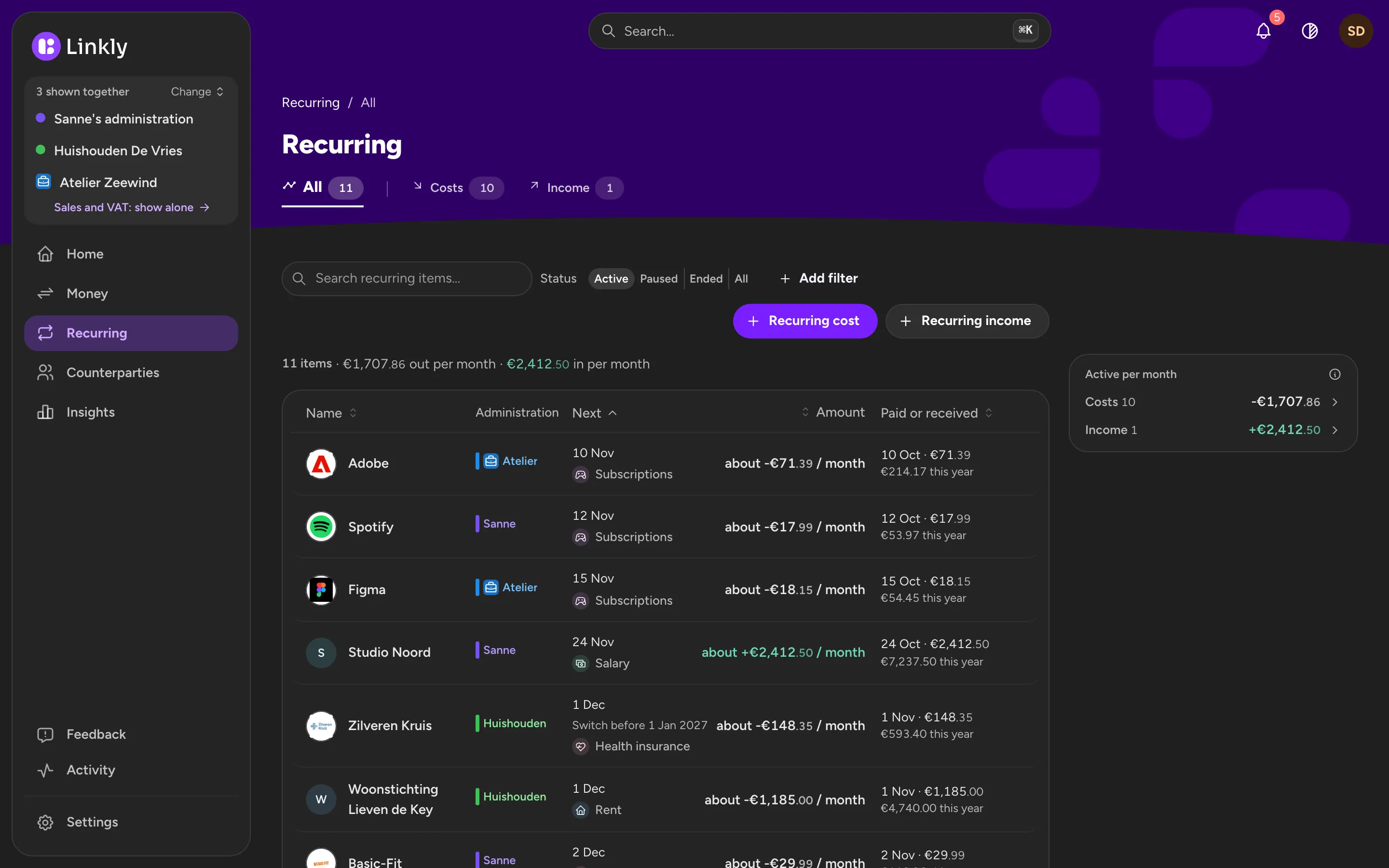
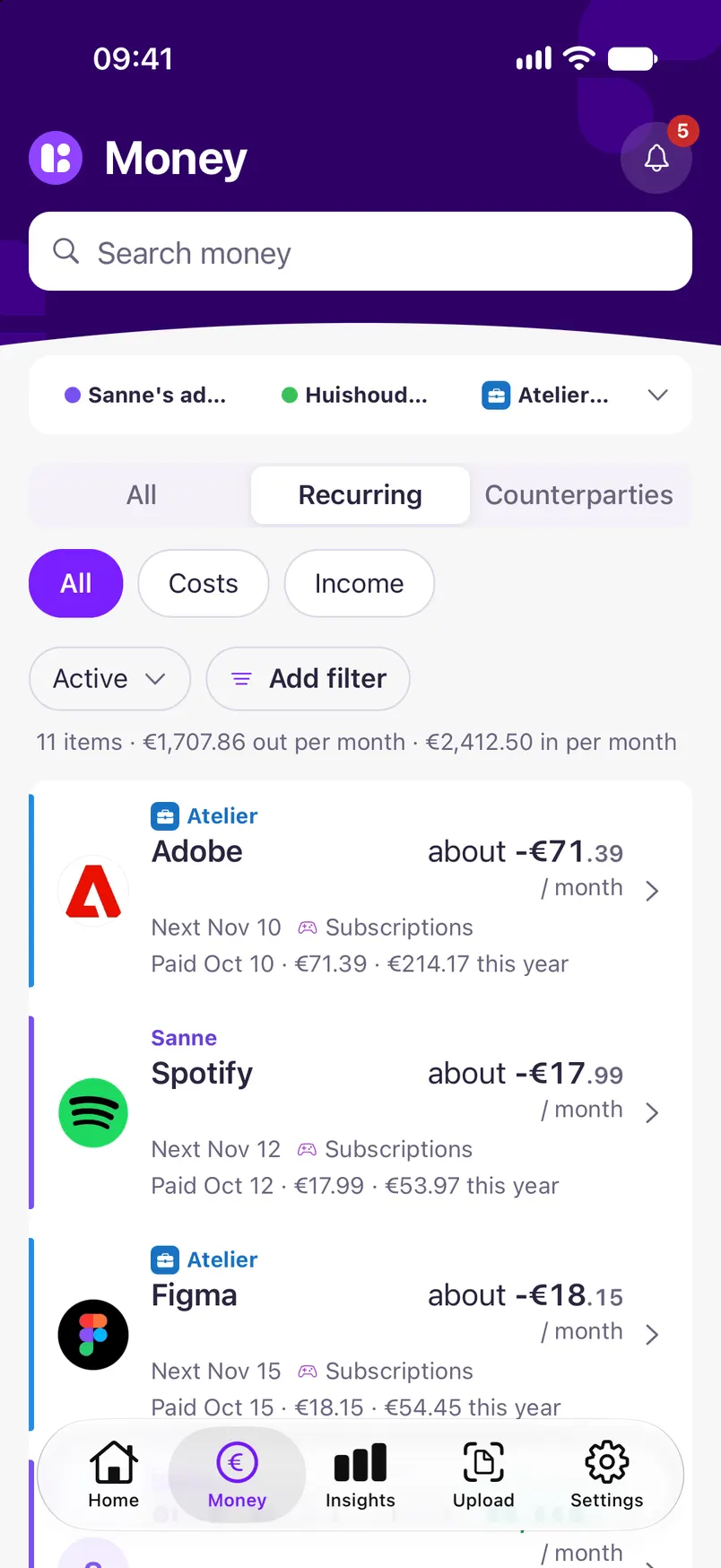
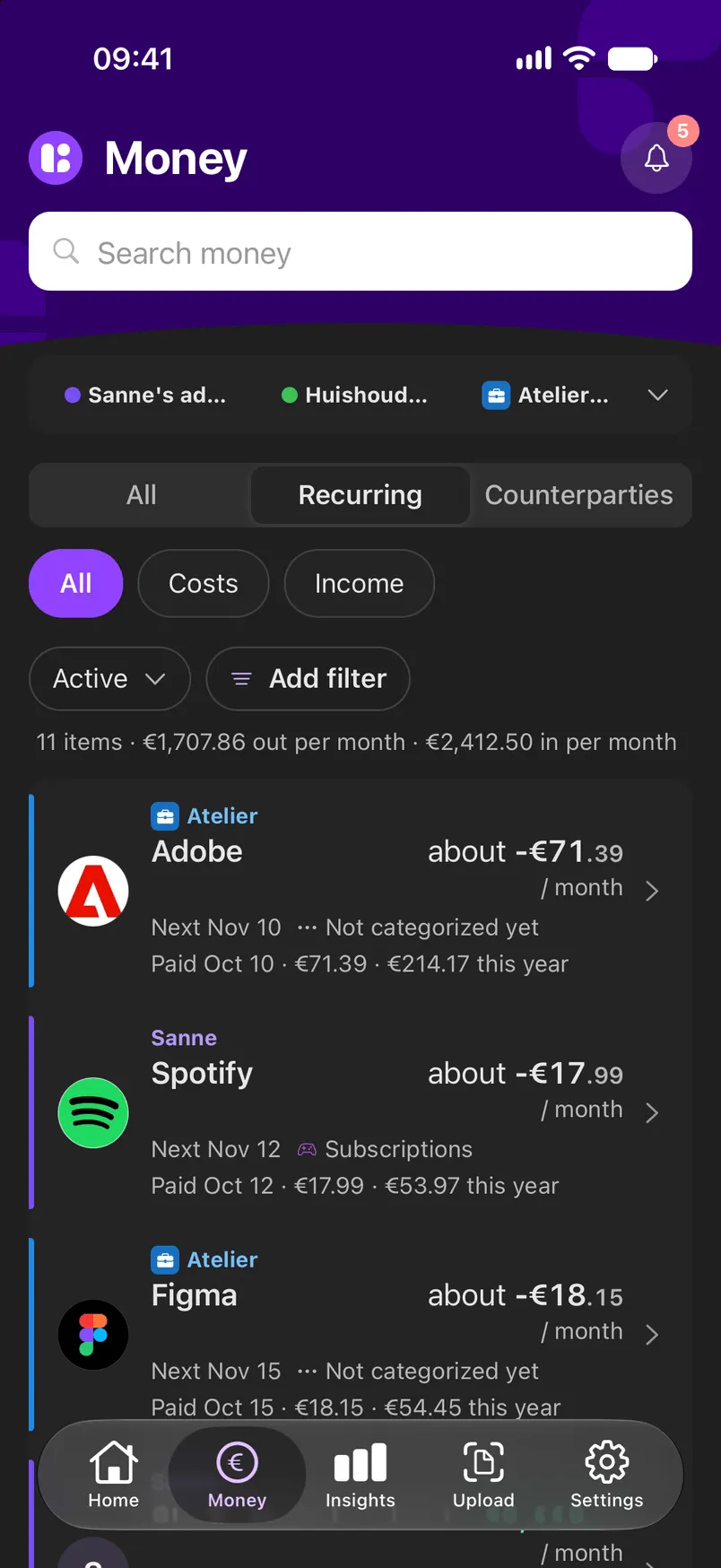
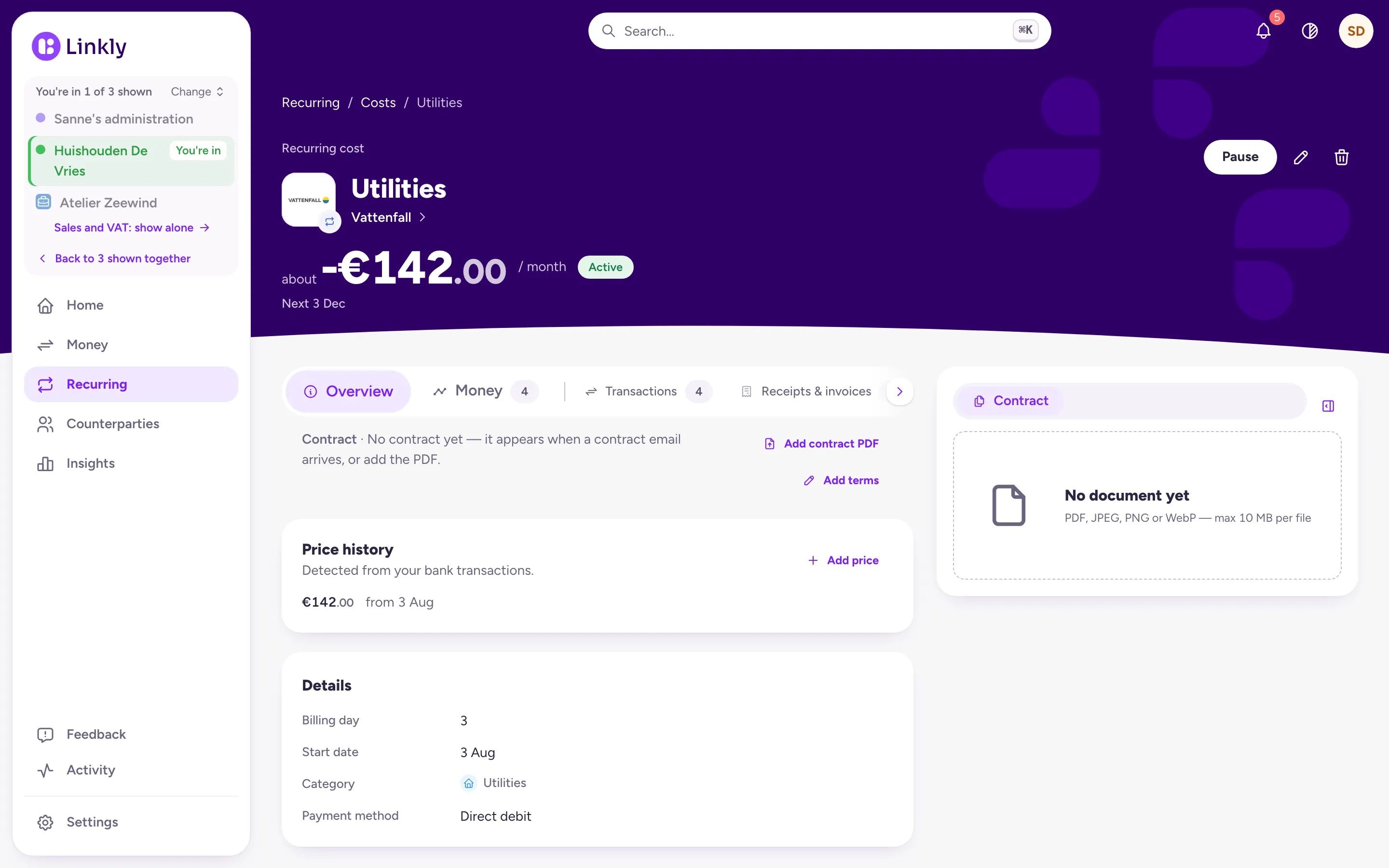
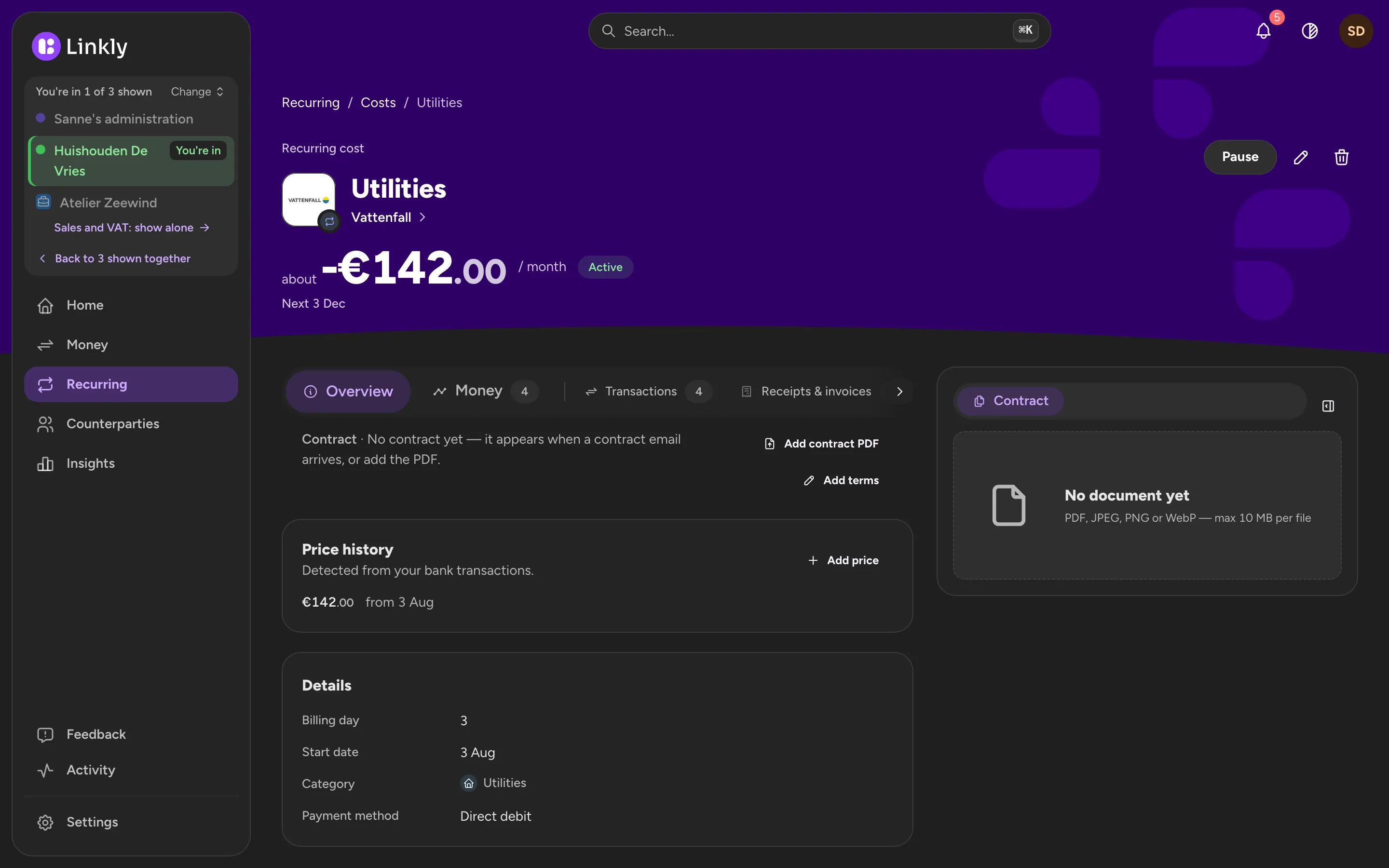
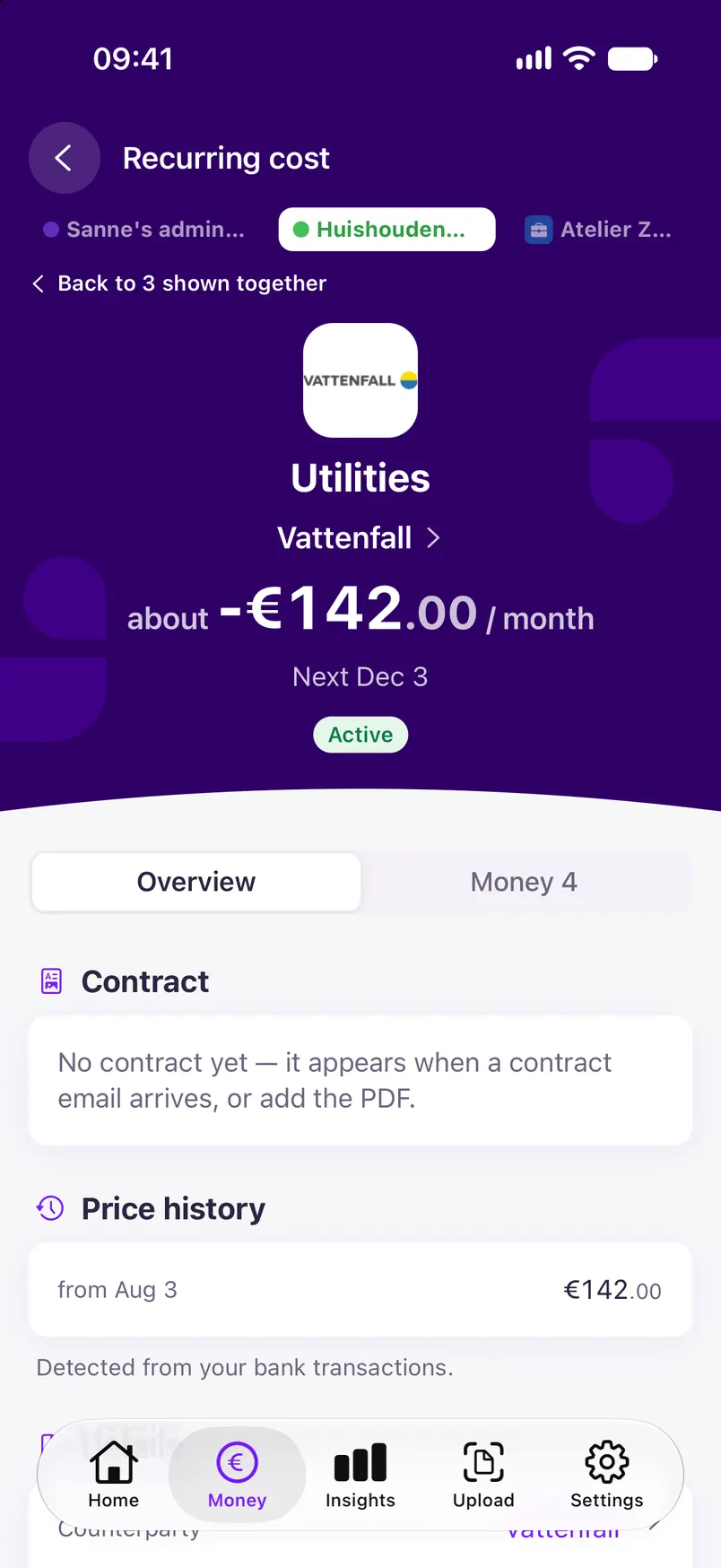
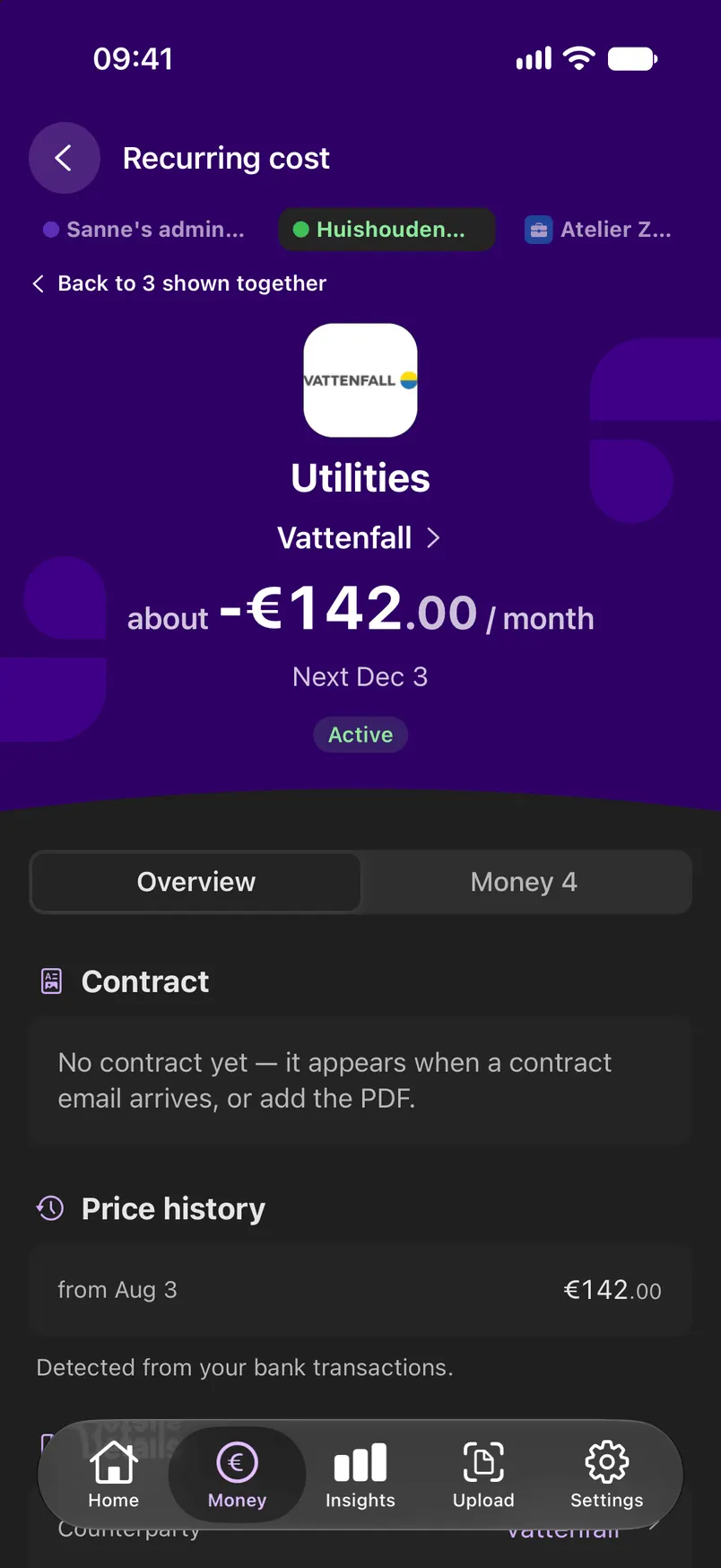
From your bank payments Linkly picks out what keeps coming back: rent, energy, insurance, phone, gym, streaming, and your salary too. For each one you see the amount, the next payment and what you have paid this year, with the total per month at the top.
- Costs and income apart
- A yearly amount also shown per month
- A payment that does not arrive stands out
Price, term and notice period in one place
Contract emails in your inbox fill in the terms: how long it runs, the notice period, whether it renews automatically and how to cancel. You can also fill them in yourself or add the contract as a PDF. When the price changes, the new price is in the price history, with where it came from.
- ‘Cancel by …’ shows on the subscription when the date is near
- A notification on your phone when you can cancel
Cancelling: Linkly drafts the letter
When you want out, Linkly writes a cancellation letter with the contract's details. You send it yourself, by post or from your own email. Once the provider confirms the cancellation by email, the subscription ends in Linkly automatically.
- Print it, save it as a PDF or copy it
How much goes to recurring costs?
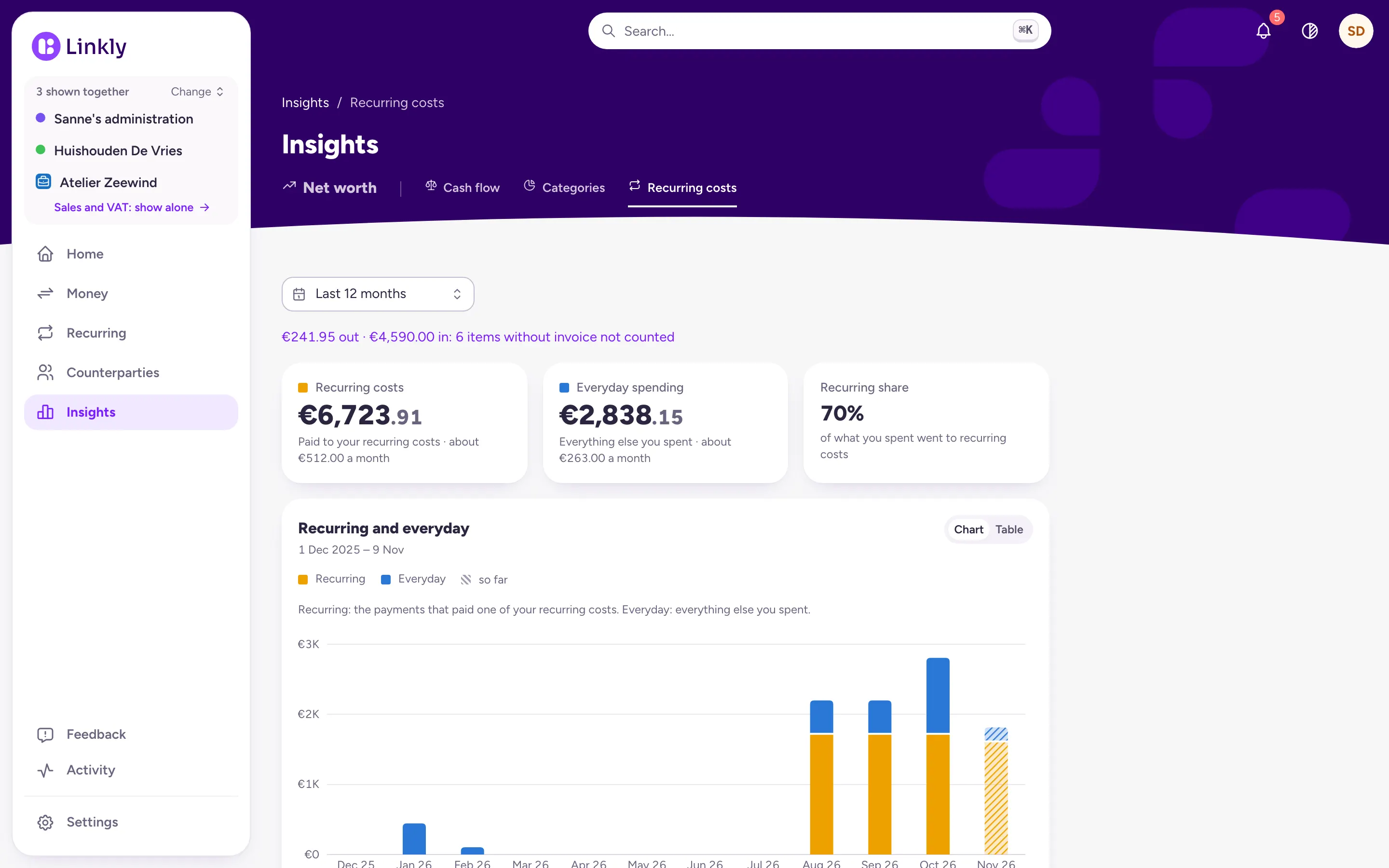
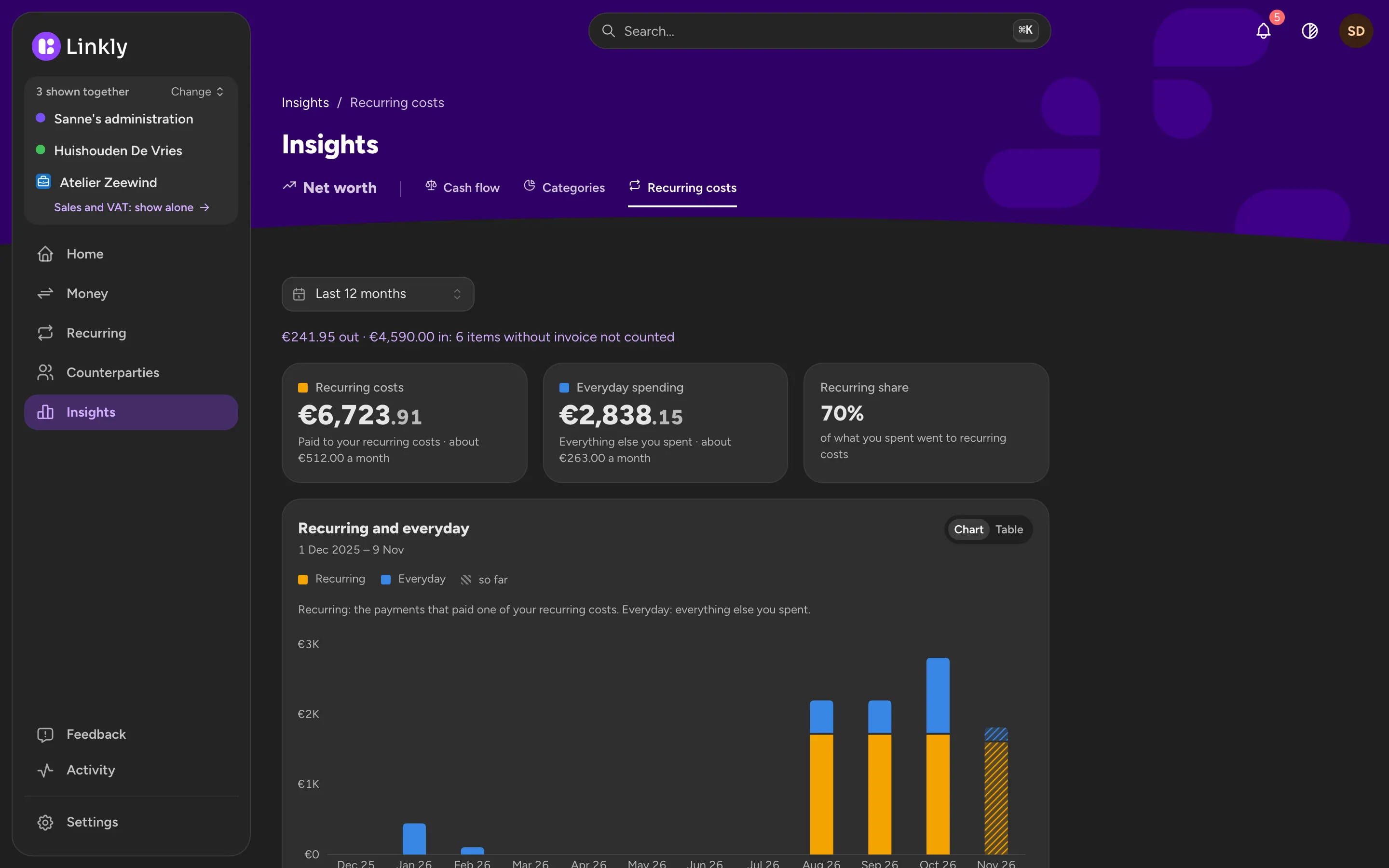
Insights puts your recurring costs next to the rest of your spending, month by month, with their share as a percentage.
- Per month and over the whole year
What Linkly doesn't do yet
Linkly does not cancel for you and does not switch you to another provider: it drafts the letter, you send it. It has no comparison of cheaper providers.
Common questions
How quickly can I cancel a subscription?
It depends on the kind of subscription and on the country. In the Netherlands, where Linkly is made, the government says a phone, internet or TV subscription can always be cancelled after the first contract period with one month's notice; newspapers and magazines have rules of their own. Your contract has the exact term. In Linkly it shows on the subscription, when a contract email stated it or when you fill it in yourself.
Does Linkly cancel my subscription for me?
No. Linkly drafts the cancellation letter; you send it to the provider.
How does Linkly know what a subscription is?
Linkly looks for payments to the same counterparty that come back at a steady rhythm. What it recognises you can change, or delete when it is wrong.
Can I use Linkly now?
Not yet. Linkly is in development and not open to everyone yet. Leave your email address and you will hear when it opens.
Hear when Linkly opens
Linkly is not open to everyone yet. Leave your email address and you will hear when it is.